
When installing a new device, we draw attention to the tips for using your Micro GC Fusion.
Micro GC systems (such as the Micro GC Fusion®) are renowned for their speed, precision, and modular robustness. A well-maintained analytical module can perform millions of continuous injections without requiring major overhaul.
To guarantee high instrument uptime and analytical accuracy, four operational parameters must be strictly controlled:
- Carrier Gas Quality
- Carrier Gas Delivery Pressure
- Sample Matrix Conditioning
- Sample Inlet Pressure
This guide explores the first rule: Carrier Gas Purity.
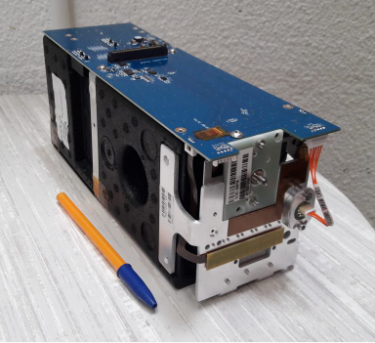
To safeguard your instrument, the carrier gas must meet a minimum purity specification of 99,9995% or more (equivalent Alpha gas 1 or 5.5 depending on the supplier).
Depending on the analytical application, Micro GC can utilize different carrier gases—most commonly helium, argon, hydrogen, or nitrogen.
The carrier gas flowing through your Micro GC's analytical modules is critical to performance.
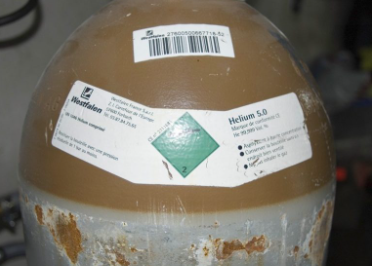
Gas quality is defined by its purity. A 99.9995% purity grade means your gas contains less than 0.0005% impurities.
These impurities typically consist of moisture (H2O), atmospheric air (O2 and N2), and trace hydrocarbons (HC). If you are uncertain about your gas quality, check the purity specifications printed on the cylinder label.
Here are a few key guidelines regarding carrier gas: the gas flows through the chromatographic column before passing over the detector.
Both components are vulnerable to poor-quality gas.
First, the analytical column: stationary phases can be highly sensitive to specific contaminants.
Take the molecular sieve column as an example—it is designed to separate permanent gases (H2, O2, N2, CH4, CO...).
However, molecular sieve material also traps moisture. In fact, this same material is widely used inside laboratory gas purification filters.
If your carrier gas contains moisture, the column acts as a filter, adsorbing and retaining water molecules.
As moisture occupies active separation sites, the column loses its resolving power and efficiency degrades.
A thermal regeneration cycle (bake-out) is then required to clean it.
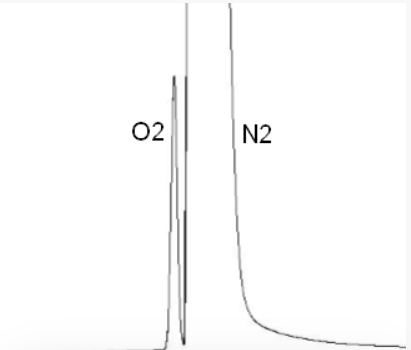
Trace oxygen in your carrier gas poses an even greater risk. At elevated temperatures, oxygen oxidizes sensitive stationary phases, causing permanent and irreversible column damage depending on the polymer type
Using low-grade carrier gas directly results in retention time drift, peak degradation, and premature column failure.
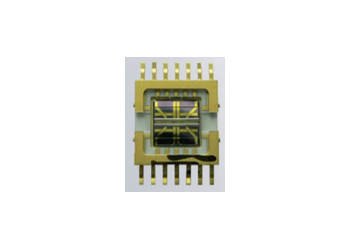
At the detector level, trace oxygen (O2) can oxidize the micro-thermal conductivity detector µTCD filaments. Over time, this leads to elevated baseline noise and signal drift. In severe cases, it can cause filament breakage requiring complete detector module replacement. Fortunately, filament failure remains rare as modern µTCD units feature built-in hardware safety cut-offs.
Less visible but equally critical is measurement interference. If your carrier gas contains trace contaminants, your ability to measure those same compounds in your sample is directly compromised. Because a TCD compares the sample effluent against a reference carrier gas stream (assumed to be pure), the detector cannot quantify impurities at concentrations lower than those present in the carrier gas itself. This is why high-sensitivity trace-level analyses require a higher grade carrier gas. In severe cases, impurity levels in the carrier gas produce negative chromatogram peaks, indicating that the sample matrix is cleaner than the carrier gas—a clear sign of carrier gas contamination.
As demonstrated, carrier gas purity is vital for both hardware protection and analytical integrity. However, obtaining a high-purity cylinder is only the first step: you must preserve gas purity all the way to the instrument inlet. Proper installation and line conditioning are essential to avoid common contamination pitfalls.
Practical tips for preserving carrier gas purity:
1. Clean the cylinder valve: Always verify that the cylinder connection thread is clean and dry before mounting the pressure regulator.
2. Use a high-purity pressure regulator: Always select a high-quality dual-stage regulator for safety and performance. Inspect the sealing washer and replace it if it shows any sign of wear.
Using low-grade carrier gas directly results in retention time drift, peak degradation, and premature column failure.
Avoid using a regulator previously connected to a different gas type. If unavoidable, perform 5 to 10 pressurization and bleed cycles to flush the internal volume before connecting to the Micro GC.
3. Choose instrument-grade tubing: Never use polymer or plastic lines (such as PTFE or PVC) due to gas permeability.
Opt for pre-cleaned, instrument-grade 316L stainless steel or copper tubing.
Avoid recycled tubing that has previously carried other fluids or liquids.
Tubing must be thoroughly clean and completely dry. Always purge the entire supply line before connecting.
Because Micro GC consumes very little gas (
4. Secure the entire supply infrastructure: Maintain full control over the line from the gas source to the instrument inlet. If connected to a gas distribution network, ensure it was properly flushed and that cylinder changes follow strict EHS protocols to prevent air back-diffusion. For hydrogen generators, ensure strict adherence to maintenance schedules to guarantee dry, clean gas output.
5. Perform electronic leak checks: Always test for leaks using an electronic gas leak detector or via a static pressure-decay test. Avoid liquid leak detectors (such as Snoop®)—if liquid enters the tubing, it can permanently contaminate micro-fluidic channels and columns.