GC-VUV Analyzers: The Next Generation of Gas Chromatography Detection
Unlock universal detection and absolute spectral identification for your most complex gas chromatography analyses.
The Ultimate GC-VUV Platform for Turnkey Solutions
Discover the power of Vacuum Ultraviolet (VUV) spectroscopy combined with gas chromatography. As a breakthrough in analytical chemistry, GC-VUV technology delivers unprecedented selectivity and quantitative precision for complex gas and liquid mixtures. Overcoming the limitations of traditional detectors like FID or MS, VUV analytics streamlines your workflow, significantly reduces analysis time, and easily handles challenging co-elutions.
How Does VUV Spectroscopy Work?
Vacuum Ultraviolet (VUV) detectors capture absorption spectra in the 114 to 400 nm wavelength range. Because almost all chemical compounds absorb strongly in this specific VUV region, the technology provides unique spectral fingerprints for every molecule—including isomers that are notoriously difficult to separate. Through advanced spectral deconvolution, GC-VUV can mathematically separate co-eluting peaks, ensuring highly accurate quantification without requiring complex chromatographic separations.
Why settle for complex multidimensional systems like the Reformulizer when you can achieve better results with a single-column GC? The VUV detector simplifies your laboratory workflow by providing robust data for PIONA Analysis (ASTM D8071, EN ISO 18015), Jet Fuel Analysis (ASTM D8267), Diesel (ASTM D8368) and Waste Plastic Process Oil from chemical or thermal processes (ASTM D8519).
The GC-VUV is fully compliant with the most stringent international standards (ASTM, ISO, DIN) for hydrocarbons processes applications.
Turnkey GC-VUV Solutions for Industrial and ASTM Applications
At Chemlys, we don’t just deliver equipment; we deliver a turnkey analytical solution. Our engineers ensure a seamless integration into your laboratory.
Chemlys provides tailored setup to match your sepcific laboratory environment including the hydrogen carrier gas method transfer.
Reliability is Our Core Commitment. Choosing Chemlys means gaining a long-term partner. Chemlys provides reactive and specialized support to keep your lab running. It includes application after-sales service, on-site repair and maintenance and ongoing training for the users.
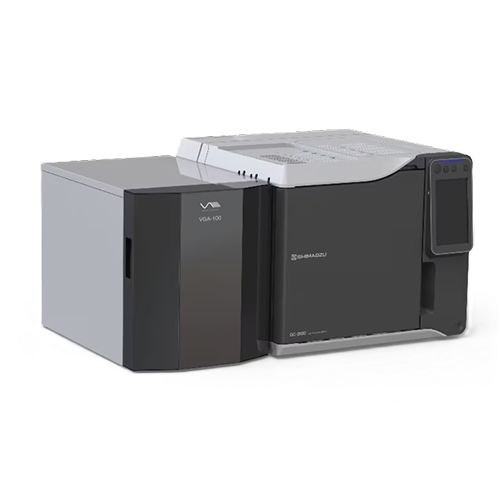
The VGA detector is engineered with innovative technology to meet the rigorous demands of advanced applications.
Key Advantages of GC-VUV Technology
- Advanced Qualitative Analysis: Compounds and chemical families are identified with absolute certainty via their unique VUV spectral fingerprints.
- Unrivaled Selectivity: Achieve superior resolution for isomers and co-eluting analytes without the need for baseline chromatographic separation.
- Streamlined Quantitation: Benefit from a universal detector response based on the Beer-Lambert Law, with automated concentration calculations using integrated standards.
Operating Principle:
High-energy, short-wave VUV light induces electronic transitions in most gas-phase chemical bonds. The VUV spectra are specific to the chemical structure and reflect the intrinsic absorption cross section of each compound.
Each measured compound thus has a unique spectral form. In addition, the individual spectra of compounds of a given family have similar forms. This makes it possible to identify in a targeted way the contents of various families of compounds in a sample. Ex: PIONA analysis in a fuel.
VUV sensors (VGA-100 and VGA-101) are designed for gas chromatography and gas flow analysis applications.
The Power of Automated Deconvolution: One of the most significant advantages of the VGA series is its powerful deconvolution software. By leveraging unique spectral data, it eliminates the need for baseline chromatographic resolution: Co-eluting analytes are accurately identified and quantified, Isomers are easily distinguished. Unlike traditional multi-column, valve-based GC systems (such as the Reformulizer), VUV deconvolution simplifies the hardware setup while delivering more reliable data in less time.
With its ability to resolve the most challenging matrices, the GC-VUV has become the preferred solution for analyzing fuels and other complex hydrocarbon mixtures.
Wavelength range: 125-240 nm
Light source: Deuterium lamp
Maximum operating temperature: 300°C or 430°C depending on the models
Acquisition frequency: 75 Hz
| Norms | Scope of applications |
| ASTM D8367 | Standard Test Method for Determination of Saturated Hydrocarbon, Aromatic, and Diaromatic Content of Aviation Turbine Fuels using GC-VUV |
| ASTM D8368 | Methyl esters of fatty acids (EMAG), aromatic compounds and polyaromatic compounds in diesels and biodiesels |
| ASTM D8369 | Standard Test Method for Detailed Hydrocarbon Analysis (DHA/VHA) by High Resolution Gas Chromatography with Vacuum Ultraviolet Absorption Spectroscopy (GC-VUV) |
| NF EN 18015 | Automotive fuels - Determination of hydrocarbon group types and select hydrocarbon and oxygenate compounds - GC-VUV method |
| ASTM D8519 | Standard Test Method for Determination of Hydrocarbon Types in Waste Plastic Process Oil (WPPO) using GC-VUV |
| ASTM D8071 | Standard Test Method for Determination of Hydrocarbon Group Types and Select Hydrocarbon and Oxygenate Compounds in Automotive Spark-Ignition Engine Fuel using GC-VUV |
A Fully Integrated Turnkey GC-VUV Solution

GC Analyzers
We provide high-performance Gas Chromatography systems specifically configured to maximize the capabilities of your VUV detector.

Tailored Service Agreements
We provide a full range of expert services to optimize your GC-VUV experience, ensuring our support aligns perfectly with your laboratory’s specific requirements.

Training
Empower your team with specialized knowledge in industrial gas chromatography. Gain the technical autonomy required to optimize your analytical workflows and evolve your processes.
Our analytical solutions integrate ...
Turnkey Analytical Solutions: From Concept to Compliance
Development of application alongside you with your samples and adaptation of existing standard methods.
Our commitment concludes with personalized, hands-on training tailored to your industry’s requirements, ensuring your team achieves immediate operational proficiency and long-term analytical autonomy.
Scalable Configurations: Future-Proofing Your Investment
As your analytical requirements evolve, so does our technology. Whether you need to reconfigure your GC pathways or adapt sampling interfaces to meet new process constraints, CHEMLYS provides the expert engineering to upgrade and optimize your existing system.
New standard to follow or modification of initial method with addition of new compounds, we will accompany you in your evolution.