
Transpector® APX & CPX: Real Time Gas Analysis at the ppb scale
The reference of the compact mass spectrometry for real-time gas analysis, trace detection to ppb and monitoring of vacuum or atmospheric pressure processes
Real-time, accurate and continuous gas analysis
The INFICON Transpector® APX and CPX are quadripolar mass spectrometers (residual gas analysers – RGA) with differential pumping designed to measure the composition of gas mixtures and detect trace contaminants. Thanks to the integration expertise of CHEMLYS, these analyzers ensure continuous online monitoring of your industrial processes and laboratory experiments, both vacuum and atmospheric pressure.
Transpector® APX & CPX: High Sensitivity and High Resistance Mass Spectrometry
Developed to meet the requirements of the most critical semiconductor processes (ALD, CVD, PECVD, PVD and engraving), the Transpector® APX and CPX have established themselves in industry and research for process monitoring, leak detection, and contamination control. Their architecture combines a closed ion source (CIS), integrated turbomolecular pumping and software platform FabGuard® allows you to obtain direct and real-time visibility on the chemistry of your reactions.
Two complementary ranges (CPX & APX) depending on your environment: The Transpector® CPX offers a versatile compact solution with a detection limit of less than 200 ppb.
For corrosive environments or extreme sensitivity needs, the Transpector® APX incorporates protective coating xParts and reaches a detection limit of less than 10 ppb. CHEMLYS standard offers both ranges 0–100 amu and 0–200 amu.
Total compatibility, from vacuum to atmospheric pressure
Equipped with a differentially pumped closed ion source (CIS), the Transpector® APX and CPX interface with vacuum equipment as well as with sample at atmospheric pressure with theinlet developed by CHEMLYS (available in stainless steel heated capillary or inert coated tube).
From standard equipment to turnkey process integration, our teams secure the entire sampling process
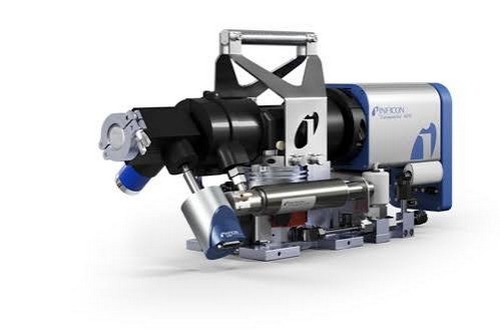
- A differential pumping closed ion source (CIS), allowing the sampling of atmospheric pressure up to the vacuum pushed while limiting the interference of the pressure reduction system.
- Exclusive xParts coating (APX model), which protects the sample path from aggressive or corrosive chemistry while improving background noise.
- Controlling by FabGuard® Software, offering real-time acquisition (SIM and SCAN modes), automatic calibration by Autotune and possible integration into a full suite of advanced process control.
Operating Principle:
- Ionization: molecules entering the inlet enter the closed ion source (CIS), where a heated filament (tungsten or iridium coated with yttria) emits electrons that ionize the gases.
- Quadripolar separation: the ions are directed into a quadripolar mass filter that sorts them according to their mass/load ratio (expressed in amu).
- Detection and Digital Processing: the selected ions reach the detector and generate a current proportional to the quantity of the gaseous component, converted numerically into real time by high-precision electronics and operated under FabGuard®.
- Intelligent Electronics and Fast Collection: the stability of the response factors minimises signal drift and noise, while the high-precision analog-digital converter ensures rapid acquisition adapted to dynamic processes.
- Active detector protection: the primary pump probe (PSG) associated with the primary pump pneumatic valve (necessary 5 bar air, or nitrogen/argon on corrosive gases) monitors the vacuum level and triggers an alarm and then shuts down the device.
- Longevity and recalation by Autotune: the detector has a service life of up to up to 10 years. Since the loss of sensitivity is the same for all compounds, normalisation monitoring remains stable until 2 to 3 days without autotune according to the pre-scaling application of the signal.
- Background noise optimization: when the original internal standard creates a light background noise detectable on the APX, CHEMLYS remove it (cap closure VCR) and recommend an external standard suitable for mass tuning at installation.
- Automatic Integration (API/PLC): multi-purpose inputs/outputs and API control enable tracking of trends and automation of process control actions (relays on partial pressure thresholds)
Find below the main specifications of Transpector analysers® APX and CPX:
| Parameter | Transpector® APX | Transpector® CPX |
| Standard mass ranges | 0–100 amu or 0–200 amu | 0–100 amu or 0–200 amu |
| Detection limit | < 10 ppb | < 200 ppb |
| Source of ions | Incrementally pumped closed ion source (CIS) | Incrementally pumped closed ion source (CIS) |
| Chemical resistance | Coating xParts in sample path (aggressive/corrosive chemistry, reduced background noise) | X |
| Inlet / Pressure | Single High temperature pressure (quadripole fully thermostated), inlet CHEMLYS At atmospheric pressure | HexBlock multi-pressure sampling unit as standard (with by-pass valve to turbo pump); inlet CHEMLYS At atmospheric pressure |
| Maximum temperature. Spectrometer | Thermostatated envelope up to 150 °C | Thermostatated envelope |
| Pompage & protection | turbomolecular pump + primary pump probe and pneumatic valve (PSG) | turbomolecular pump + primary pump probe and pneumatic valve (PSG) |
| Software & Acquisition Modes | FabGuard® (single sensor: non-simultaneous SIM and SCAN modes, trends, autotune, Excel export) | FabGuard® (single sensor: non-simultaneous SIM and SCAN modes, trends, autotune, Excel export) |
Supplement Micro GC Fusion®: Fast & Precise Online Gas Analyzer, Transpector® online mass spectrometers help answer a measurement kinetics issue when real time becomes an imperative.
This technology is commonly found in catalysis applications, thermal processes or membranes, especially when observed reactions change very quickly or are transient. Immediate detection of breakthrough in membrane processes is possible thanks to the real time and sensitivity of Transpector®.
For the same reasons, it is also an analyser that is regularly found in ATG-MS couplings for the monitoring of product formation, the appearance of by-products or deactivation phenomena.
Finally, in laboratories producing or using custom gas mixtures, the Transpector® mass spectrometer ensures the composition of the mixture without having to set up a complex configuration based on gas chromatography.
Examples of gases and their atomic masses (AMU):
- Hydrogen (H2) : 2
- Helium (He) : 4
- Methane (CH4) : 16
- Ammonia (NH3) : 17
- Water vapour (H2O): 18
- Neon: 20 / Hydrofluoric acid (HF): 20
- Nitrogen (N2) : 28 / Carbon monoxide (CO) : 28
- Ethanus (C2H6) : 30
- Oxygen (O2) : 32 / Silane (SiH4) : 32
- Hydrochloric acid (HCl): 36
- Argon (Ar): 40
- Carbon dioxide (CO2) : 44 / Propane (C3H8) : 44
- Butane (C4H10): 58
- Xenon (Xe): 132
Brochures Online mass spectrometer Transpector®:
Complete your Transpector® analyzer
High-Performance Accessories
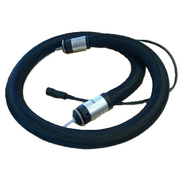
Heated transfer lines with support, membrane filters or frit (essential to avoid any liquids and particles), surface coating SilcoNert®, and standard gases for mass tuning

Maintenance contract & SAV
Technical support and after-sales service, maintenance contract

Training & Advice
Support for analytical sampling, software management FabGuard® and control of autotune procedures
Our analytical solutions integrate...
Advanced Sampling & Interface Solutions
- Inlet CHEMLYS For atmospheric pressure: stainless steel heated capillary or SilcoNERT2000 coated tube
- Membrane or filter (liquids and particles are strictly prohibited)
- Heated transfer line and its support
- Primary pump connection kit, VCR plug and pneumatic supply at 5 bar
Everything to ensure a representative analysis of your sample while protecting the source and detector.
Implementation
- On-site installation (MS online commissioning) by CHEMLYS
- FabGuard® software settings (SIM/SCAN methods, trends, autotune) and tuning standard recommendations
Evolution of the configuration
- Choice of the primary pump suitable for your installation: corrosion-resistant pump or primary pump optional depending on your existing equipment
- Integration into control-command systems (API / PLC) for statistical tracking and predictive maintenance
Chemlys support guarantees the turnkey installation of your analyzer on your experimental setup or industrial processes. Whether in research or industry, our experts ensure that the developed solution meets all your expectations.
Frequently Asked Questions about Transpector® APX & CPX:
What is the difference between Transpector® APX and Transpector® CPX?
The Transpector® APX and CPX share the same closed ion source and detector, but differ in sensitivity, size and chemical resistance. The Transpector® CPX is a compact (30% reduced volume) model with a standard HexBlock multi-pressure block and a detection limit of less than 200 ppb. The Transpector® APX also receives a xParts coating to withstand corrosive chemistry, optimize background noise and go down to 10 ppb in ALD Single Pressure.
Can an APX or CPX transpector® be used at atmospheric pressure?
Yes: Thanks to their closed ion source (CIS) combined with differential pumping and a pressure reducing inlet, the Transpector® APX and CPX can sample from atmospheric pressure to vacuum. For atmospheric pressure measurements, CHEMLYS integrates its own inlet, complemented by a heated transfer line and a membrane filter to prevent any entry of liquids or particles.
Which mass range to choose: 0–100 amu or 0–200 amu?
CHEMLYS offers standard versions 0–100 amu and 0–200 amu for APX and CPX models. The range 0–100 amu covers the majority of permanent gases, contaminants and light hydrocarbons (from H2 to 2 amu to the pentane to 72 amu, via He, CH4, NH3, H2O, CO, N2, O2, HCl, Ar, CO2 and NF3). Version 0–200 amu is required as soon as heavier species such as xenon (132 amu) need to be followed. The two models also exist in version 0-300 amu, but the loss of sensitivity on this extended range and the few cases encountered for atmospheric pressure gases make this range not commonly used.