
The safe handling of high-pressure gas cylinders in laboratories and industrial facilities relies on strict operational protocols, appropriate Personal Protective Equipment (PPE), and dedicated transport hardware (cylinder carts, transport cages).Improper management of compressed gas cylinders—pressurized up to 200 bar (2900 psi)—exposes operators to severe crush injuries, Musculoskeletal Disorders (MSDs), catastrophic pressure releases, and fire hazards.
In gas analysis environments (GC, Micro GC), high-pressure cylinders are daily necessities. However, their high mass 60 kg to 90 kg and stored mechanical energy make them high-risk assets during movement or changeovers.
Below is a technical guide from Chemlys application engineers detailing essential safety directives to safeguard your personnel and laboratory infrastructure.
Regulatory Compliance Note: The guidelines outlined below reflect industry best practices for analytical gas handling. They do not supersede facility-specific Environment, Health, and Safety (EHS) policies or site protocols. If your local organization requires stricter measures (e.g., dual-operator validation, hot-work permits, specialized PPE), those internal rules take precedence.
1. How to Safely Move Compressed Gas Cylinders?
Transport protocols depend directly on the transit distance and environment:
For Short In-Lab Movements:
Chine-Rolling Technique: Move one cylinder at a time over short, flat distances by tilting it slightly on its base ring and rolling it vertically (chine-rolling).Prohibited Methods: Never roll cylinders horizontally along the floor, drag them, or attempt to carry them manually.
For Long Distances or Industrial Sites:
Dedicated Transport Equipment: Use a two-wheeled cylinder cart fitted with safety chains/straps, or a forklift equipped with a certified crane basket or multi-cylinder transport cage.Vertical Anchoring: Cylinders must always remain vertical and securely strapped during transit.
⚠️ Critical Handling Warning: Never use the protective valve cap or main valve handwheel as a lifting handle or pulling point.
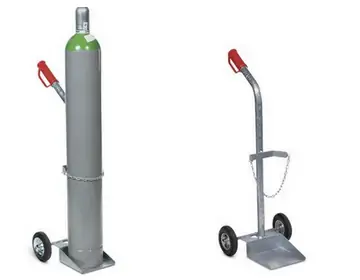
2. The Golden Rule of Cylinder Falls:
Never Catch a Dropping Cylinder!
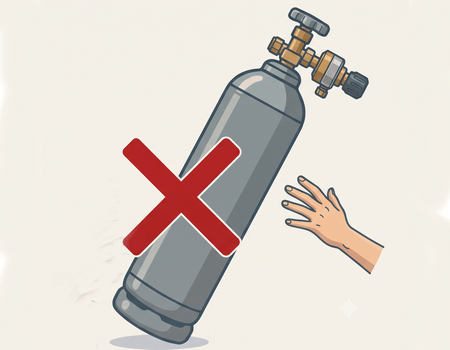
Attempting to catch a falling cylinder is an instinctual human reaction, but it is extremely dangerous.
The Absolute rule: If a cylinder starts to fall, step away immediately from its drop trajectory.
A standard B50 gas cylinder weighs between 6 kg and 90 kg (130 lbs to 200lbs). Attempting to stop its momentum causes severe spinal trauma, crushed extremities, or muscle tears.
What if the bottle flips? Step away immediately from her trajectory to avoid any crash and let her down.
3. Mandatory Personal Protective Equipment (PPE):
Handling high-pressure gas cylinders requires specialized gear to mitigate impact, shear, and sudden pressure risks:
- Safety Shoes with Metatarsal Protection Protects foot bones from severe crushing injuries if a cylinder tips or drops during transit. Falling cylinders are the leading cause of foot injuries in gas laboratories.
- High-Grip Protective Gloves. Improves handling traction and shields hands from pinch points or cryogenic burns caused by micro-leaks during depressurization.
- Safety Glasses with Side Shields. Protects eyes against high-velocity particles, whipped flex-hoses, or gas bursts when removing valve caps or cracking open cylinder valves during line purges.
4. Good Handling Practices: Do's and Don'ts:
| Scenario | Recommended Action ✅ | Prohibited Action ❌ |
|---|---|---|
| Short-Distance Movement | Roll a single cylinder vertically on its bottom rim (chine-roll). | Drag, slide, or roll cylinders horizontally on the ground. |
| Long-Distance Transport | Use a strapped cylinder trolley or a forklift with a certified transport cage. | Move uncapped or unanchored cylinders on flatbed carts |
| Cylinder Fall Event | Clear the fall path immediately and let the cylinder drop. | Attempt to catch or brace a falling cylinder. |
| Operator Protection | Wear metatarsal safety boots, grip gloves, and safety glasses. | Handle cylinders without PPE, or use greasy gloves near O2 lines. |
End-to-End Gas Infrastructure Support
by Chemlys:
Beyond supplying high-performance gas analyzers (Micro GC, Custom GC), Chemlys assists facilities in engineering safe, compliant gas delivery networks:
-
EHS & Integration Consulting: Site reviews on safety protocols, cylinder storage ergonomics, and pressure regulation layouts.
-
Custom Gas Line Construction: Selection and installation of ultra-clean stainless steel tubing, high-purity dual-stage regulators, and Swagelok® / VICI® compression fittings.
-
Safety & Hardware Consumables: Supply of wall-mount cylinder brackets, safety restraints, transport carts, and electronic leak detectors.
Need Assistance Optimizing Your Gas Infrastructure?
Our engineering team can evaluate your current setup and implement safe, efficient gas delivery networks tailored to your analytical instruments.